
Topics / Spotlights
China's Dominance in Latin America and the Caribbean's Critical Mineral Sector
Explore this Spotlight ↓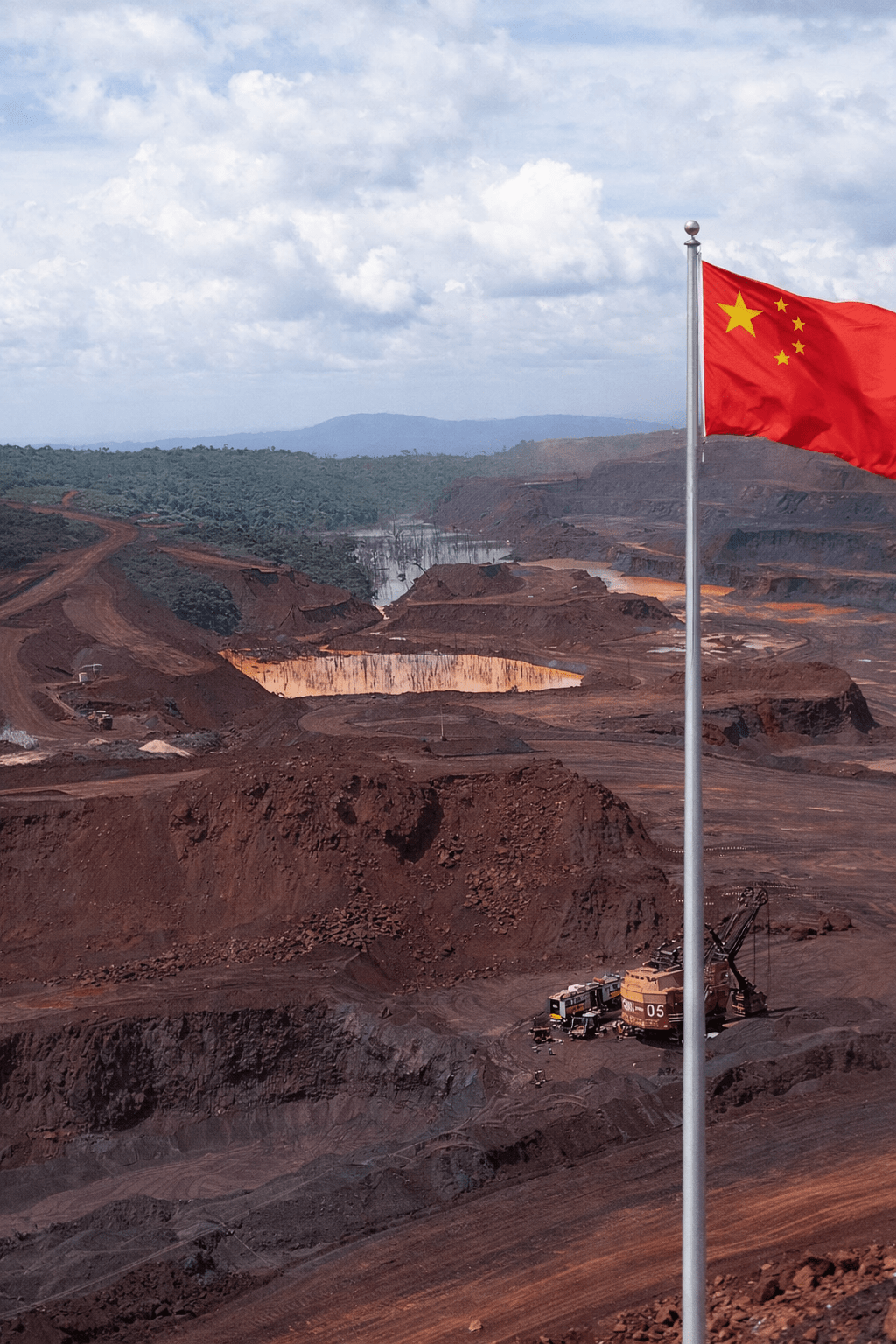
The People’s Republic of China (PRC) has adopted a highly competitive, and often predatory, approach to global mining operations, with a particular focus on South America, a region that holds some of the world’s largest critical mineral reserves. The PRC’s growing dominance across all three stages of the critical minerals supply chain (i.e., mining, midstream processing, and downstream manufacturing) is not driven by superior resource endowments, but by a deliberate and coordinated economic strategy. Through state-backed financing, Beijing strategically targets upstream extraction in low- and middle-income countries. In doing so, many Latin American and Caribbean nations accept short-term economic gains facilitated by Chinese state-owned enterprises (SOEs) and PRC-influenced private firms, often at the expense of long-term economic resilience, energy security, and defense readiness. For example, the PRC’s expanding control over midstream processing for key minerals such as copper and lithium constrains the region’s geopolitical leverage, reinforcing its role as a supplier of raw materials to Chinese and other foreign markets. This spotlight examines key developments, trends, and data illustrating the PRC’s growing consolidation of critical mineral supply chains across Latin America and the Caribbean.
Jun 2, 2025 — Publication Highlight: China’s Investment in LAC Critical Minerals Helps Its Military Modernization: Strategic competition between the U.S. and the People’s Republic of China (PRC) continues to attract the international community’s attention. The PRC seeks to expand its influence in the Global South, especially in South America, by increasing its critical mineral mining industry in the region. Throughout this report, we analyze data on state-owned enterprises (SOEs) and private Chinese mineral companies’ investments in Latin America and the Caribbean (LAC) through a World Systems Theory (WST) and state-corporate criminological lens while utilizing Geospatial Information Systems (i.e., ArcGIS software) to geo-locate mining investment hotspots. In addition, this report analyzes how these minerals modernize the People’s Liberation Army’s (PLA) military weaponry and vehicles.
Santana-Rodda, D., Camplone, L., & Mooney, M., FIU Jack D. Gordon Institute for Public Policy
Apr 9, 2026 — U.S. and China Fight Over Latin America's Critical Minerals: Countries have different room to maneuver: Experts note that Brazil and Chile have greater autonomy to balance ties with both Washington and Beijing, while Mexico’s economic dependence on the United States limits its strategic flexibility. The region should move beyond extractivism: Analysts argue Latin America will gain the most if it develops local refining, processing, and manufacturing capacity instead of remaining only a raw-material exporter. Industrialization faces major obstacles: Building smelters, refineries, and downstream industries requires capital, planning, political stability, and long-term policy continuity—factors that remain uneven across the region. Strategic sovereignty depends on value capture: The article concludes that Latin America’s long-term leverage will depend on how much value it retains domestically from its own mineral wealth rather than feeding foreign-controlled supply chains.
Expediente Publico
Apr 3, 2026 — Winning the Minerals Race Requires Building Demand, Not Just Supply: Use defense demand strategically, not exclusively: The Pentagon should serve as an early anchor customer for select minerals and components, but broader industrial demand is needed since defense consumption alone is too small to sustain full supply chains. Coordinate allied procurement: The U.S. should work with partners through frameworks like the new FORGE initiative so governments commit to sourcing a share of critical minerals from allied producers, creating reliable long-term demand. Provide long-term offtake certainty: Defense and allied procurement contracts should give investors confidence that future buyers exist, unlocking private capital for mining, refining, and processing capacity. Build resilient defense supply chains beyond stockpiles: Stockpiling remains important, but durable security requires functioning commercial ecosystems for magnets, batteries, semiconductors, and processed minerals used in weapons systems. Reduce dependence on China-linked processing: Defense planners should prioritize allied and domestic sources for minerals critical to munitions, electronics, and advanced platforms to limit vulnerability to coercive export controls.
Center for Strategic and International Studies
Mar 16, 2026 — America needs partners to challenge China’s critical mineral chokehold: In response to Trump’s “Liberation Day” tariffs, China imposed and maintained controls on key rare earth exports to the U.S., even after tariffs were partially rolled back. Beijing also used predatory pricing to undercut diversification efforts: despite rising demand in 2024, Chinese exports surged, driving lithium prices down 80% and lowering nickel, cobalt, and graphite prices, stalling global investment and further concentrating supply chains.
Chatham House
Feb 24, 2026 — Shadow Partners: China’s Collaboration with Terrorist Groups to Plunder Venezuela’s Strategic Minerals: In southern Venezuela, “black sands” (coltan, niobium, tin) are illicitly extracted and funneled into China-linked supply chains through organized smuggling and laundering networks. Minerals are trafficked into Colombia, where fraudulent documentation rebrands them as legal exports before entering global markets. This system relies on collaboration between Chinese-linked buyers and armed groups like the ELN, who jointly manage extraction, transport, and logistics (including aerial operations). The partnership strengthens criminal control while giving China access to sanctioned resources, embedding a broader illicit, “kleptocratic” supply chain. These minerals are critical to electronics, aerospace, and defense industries, amplifying their strategic importance.
Dialogo Americas
Jan 30, 2026 — Las Bambas Copper Mine: Chinese Financing for Transition Minerals: Daily truck traffic along a 458-km route caused environmental damage and community disruption, with poor consultation fueling unrest that led to deadly protests in 2015. After construction, job losses and unmet economic promises intensified tensions, triggering renewed protests and blockades in 2021–2022. Ongoing conflict led Peru to declare repeated states of emergency (2024–2025), as protests over pollution, transport impacts, and unmet commitments continued to disrupt operations.
AidData
Jan 30, 2026 — Toromocho Copper Mine: Chinese Financing for Transition Minerals: Peru suspended the mine in 2014 over acid wastewater contamination; although fixes were implemented, ongoing health concerns—such as elevated silver levels in children—persist. Chinalco resettled 4,000–5,000 residents to Nueva Morococha, but communities report poor living conditions, unemployment, contamination, and unsafe environments. The shift to open-pit mining displaced local workers, and resistance to relocation continued, culminating in the forced removal of remaining families in 2025.
AidData
Nov 12, 2025 — Predatory Pricing: How the Chinese Communist Party Manipulates Global Minerals Prices To Maintain Its Dominance: The report analyzes how Beijing leverages subsidies, regulation, and industrial policy to shape global critical mineral markets. It finds China treats minerals as strategic assets, using state-backed financing, refining dominance, and price controls to influence supply and pricing. These practices distort markets, deter Western investment, and create vulnerabilities in key national security and technology sectors.
U.S. House of Representatives Select Committee on China
Oct 29, 2025 — Geopolitics, Host Country Policy, and Critical Mineral Investment in Latin America: The report analyzes how U.S.-China rivalry and local regulations shape multinational strategies in Latin America’s critical minerals sector. China’s Belt and Road expands investment, while U.S. policies and the Minerals Security Partnership steer firms toward allied partnerships. Latin American countries balance both powers, ranging from resource nationalism to open markets, while advancing national interests. It provides guidance for firms navigating this evolving geopolitical and regulatory landscape.
Academy of International Business
Jun 6, 2025 — China’s Growing Influence in Latin America: In May 2025, China hosted Latin American and Caribbean leaders at a summit in Beijing, where Chinese President Xi Jinping announced a $9 billion investment credit line for the region. Security & Space: Beijing has expanded its presence in Latin America’s space sector and deepened military ties, particularly with Venezuela. Energy: From 2000–2018, China invested $73B in Latin America’s raw materials and energy sectors, including refineries and processing plants. More recently, it has targeted lithium in Argentina, Bolivia, and Chile—home to about half of global reserves. Infrastructure: Beijing has financed construction projects across the region, focusing on airports, highways, ports, and railways. Chinese entities have established varying levels of ownership or control over more than one hundred port projects worldwide, including at least a dozen across Latin America and the Caribbean.
Council on Foreign Relations
Apr 15, 2025 — China’s Halt of Critical Minerals: This podcast discusses China’s halt of critical minerals to the United States. In addition to consumer products, the Pentagon and defense contractors are heavily reliant on magnets and rare earth minerals mined or processed in China.
Center for Strategic and International Studies
Apr 14, 2025 — The Consequences of China’s New Rare Earths Export Restrictions: China imposed export restrictions on seven rare earth elements in April, requiring special licenses in response to U.S. tariffs. The new restrictions apply to 7 of 17 medium and heavy REEs (samarium, gadolinium, terbium, dysprosium, lutetium, scandium, and yttrium) and requires companies to secure special export licenses to export the minerals and magnets. Defense Industry: The United States is particularly vulnerable for these supply chains, and these REEs are essential for the development of defense technologies: F-35 fighter jets, Virginia- and Columbia-class submarines, Tomahawk missiles, radar systems, Predator unmanned aerial vehicles, and the Joint Direct Attack Munition series of smart bombs. Three Implications: Short-term export disruptions, restricted access for U.S. defense firms, and increased global pressure to align with China to secure supply.
Center for Strategic and International Studies
Apr 3, 2025 — Profitability and power: Fixing US critical minerals supply chains: China dominates the three key stages of critical minerals supply chain (i.e., mining, midstream processing, and downstream manufacturing) not because it has better resources, but because it has a better economic strategy. Through state-backed subsidies, China shields its companies from market forces, allowing them to endure losses in pursuit of long-term control.
Atlantic Council
Feb 27, 2026 — Chasing copper and cobalt: China’s mining operations in Peru and the DRC: China is securing critical minerals for clean energy through Belt and Road investments, targeting upstream extraction in developing countries. Over two decades, Chinese state lenders heavily financed copper and cobalt mining, especially in Peru and the DRC, which received over $29.8 billion (USD) combined. Funding is primarily channeled through project companies and joint ventures tied to Chinese firms. Nearly all financing supports projects with Chinese ownership stakes, reinforcing Beijing’s control over supply chains. Beijing selectively funds mining operations where Chinese companies have an ownership stake. 97% ($16.1 billion) of China’s state-directed transition mineral lending to Peru and 95% ($12.5 billion) of lending to the DRC between 2000 and 2021 specifically supported transition mineral operations which are partially or wholly Chinese-owned.
AidData
Feb 10, 2025 — Critical Minerals and the Future of the U.S. Economy: The United States is 100 percent import reliant for 12 of the 50 minerals identified as critical by the U.S. Geological Survey (USGS) and over 50 percent import reliant for another 29. China is the top producer for 29 of these critical minerals. Over the last two years, China has rolled out export restrictions, including complete bans, on antimony, gallium, germanium. China has a stranglehold on minerals processing, refining between 40 and 90 percent of the world’s supply of rare earth elements, graphite, lithium, cobalt, and copper.
Center for Strategic and International Studies
Jan 28, 2025 — Power Playbook: Beijing’s Bid to Secure Overseas Transition Minerals: More recently, China has doubled down on efforts to grow high-tech industries that rely on transition mineral inputs. In its 14th five-year development plan for 2021 to 2025 and its increased rhetoric on the “New Three” (新三样)—EVs, solar panels, and lithium batteries—Beijing has pushed transition minerals and their downstream products as strategic priorities. China’s official sector financing commitments for transition minerals operations peaked during the first full year of the BRI (2014), with over $12 billion in lending commitments that largely supported copper mining operations in Peru ($10.4 billion), Ecuador ($1.4 billion), Beijing disburses funds over multiple years after issuing a loan or grant commitment for a transition mineral project.
AidData
Jan 3, 2025 — China’s Energy Sector Strategy, a Risk for Latin America’s Sovereignty: Between 2005 and 2022, “approximately two-thirds of total lending to Latin America and the Caribbean from Chinese policy banks went toward energy projects. 36 of the 67 loans granted by Chinese commercial banks to the region between 2007 and 2021 were for the energy sector. Eleven of these were for renewable and hydroelectric energy. Power Grids: Over the past five years, 75 percent of Chinese mergers and acquisitions in Latin America have involved power supply operations. “The threat is not so much that China might turn off the power, but that it has acquired a tool to exert more subtle geopolitical pressure.” Photovoltaics: China heavily invested in what is referred to as the “new three,” namely electric vehicles, lithium-ion batteries, and solar panels. Wind Energy: In Brazil, in Camaçari, in the northeastern state of Bahia, a wind turbine factory of Chinese state-owned company Sinoma Wind Power has been in operation for the past few months. Nuclear Energy: Beijing is expanding its energy strategy in Latin America in the nuclear sector through the China National Nuclear Corporation (CNNC), a state-owned company that also serves China’s military interests.
Dialogo Americas