Mar 17, 2026 — Smart Power at Sea and China’s Dual Use Maritime Operations in Latin America: China’s expanding maritime presence in Latin America reflects a broader strategy of leveraging ostensibly civilian platforms, such as humanitarian and research vessels, to advance geopolitical influence and operational access in the Western Hemisphere. While these deployments are framed as medical diplomacy or scientific cooperation, they enable Beijing to build regional goodwill, normalize port access, and collect environmental and seabed data with potential military applications.
Vessels such as the Peace Ark hospital ship and research platforms like Tan Suo Yi Hao illustrate how China blends soft power with strategic positioning. These missions facilitate defense engagement, enhance maritime domain familiarity, and may support the mapping of undersea infrastructure and conditions relevant to submarine operations. Unlike U.S. humanitarian deployments, which are typically crisis-driven, China’s missions are more consistent and politically oriented, reinforcing long-term presence and influence.
This report argues that China’s use of “white-hulled” vessels, including research ships, coast guard units, and distant-water fishing fleets, represents a gray-zone approach that blurs the line between civilian and military activity. These deployments expand China’s operational awareness while minimizing political signaling. As great power competition intensifies, such activities may gradually challenge regional maritime governance and U.S. influence. Strengthening monitoring capabilities, regulatory frameworks, and regional partnerships will be critical to ensuring transparency, protecting sovereignty, and safeguarding strategic maritime infrastructure.
Juan Pablo Toro, Martin Brown FIU's Jack D. Gordon Institute
Mar 18, 2026 — China’s Political Warfare: Challenges to Taiwan and the United States in Latin America: In recent decades, China has expanded its role in Latin America through a combination of economic engagement and strategic political activity, increasingly challenging U.S. influence in the region. While Beijing promotes trade, infrastructure development, and public diplomacy to build goodwill, it simultaneously advances core geopolitical objectives, particularly isolating Taiwan diplomatically and strengthening its position in the Western Hemisphere. This broader approach reflects a form of political warfare that blends economic incentives with diplomatic pressure and security engagement.
China’s presence also intersects with regional security challenges. Its distant-water fishing fleets have contributed to illegal, unreported, and unregulated (IUU) fishing across Latin American waters, depleting resources and raising sovereignty concerns. Additionally, China’s role in supplying precursor chemicals used in fentanyl production has indirectly enabled transnational criminal networks that impact both Latin America and the United States. At the same time, Beijing has deepened ties with authoritarian regimes, expanded military exchanges, and supported the development of dual-use infrastructure with potential strategic and intelligence applications.
While China’s economic importance makes it an attractive partner for many Latin American countries, its activities introduce long-term concerns related to governance, security, and regional stability. These dynamics complicate U.S. policy responses and highlight the growing strategic competition shaping the hemisphere.
Henry Large Foreign Policy Research Institute
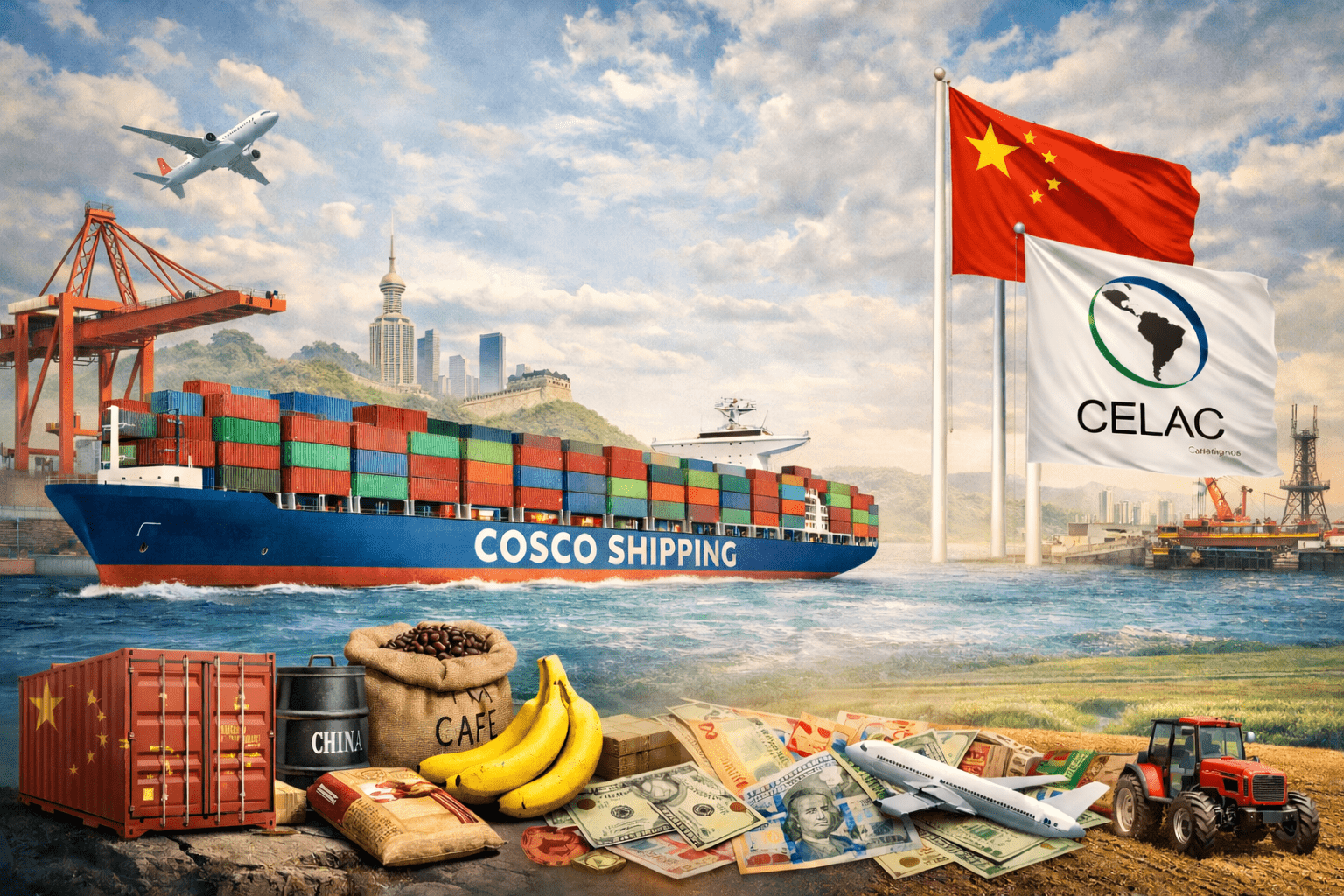
Mar 5, 2026 — The Shield of Americas Gathering and an Amplified Strategy to Counter China in the Western Hemisphere: In the mid-2020s, China’s economic and strategic footprint in Latin America has reached unprecedented levels, with trade surpassing $500 billion and investments spanning ports, telecommunications, and critical infrastructure. This growing presence has raised concerns in Washington, particularly as Chinese state-linked companies expand control over strategic assets and digital networks across the region. In response, the United States, under a renewed focus on the Western Hemisphere, has begun advancing a coordinated strategy to counter Beijing’s influence through economic, security, and governance initiatives.
China’s engagement has translated into tangible leverage, including a network of port projects, space infrastructure, and telecommunications systems tied to firms like Huawei. These developments, alongside rising trade and industrial exports, have deepened Latin America’s economic dependence on China while increasing the risk of dual-use infrastructure and data vulnerabilities. At the same time, Beijing continues to expand its influence through state-backed financing and long-term strategic positioning in key sectors.
This report suggests that U.S.-China competition in Latin America is increasingly centered on control over strategic assets, supply chains, and digital infrastructure. While the United States retains advantages in investment, geography, and security partnerships, its ability to counter China will depend on offering credible economic alternatives and strengthening regional cooperation. Efforts to enhance infrastructure financing, secure digital networks, and improve transparency are critical to reducing China’s influence while maintaining regional stability.
Ryan Berg CSIS
Mar 1, 2025 — Winning Hearts, Changing Minds: A Data-Driven Approach to Measure China's Influence in Latin America: Between 2000 and 2021, China provided US $382.63 billion (constant 2021 US$) in dev elopment finan ce to Latin A merica and the Caribbean (LAC). China’s expanding footprint in LAC through development finance poses strategic challenges to U.S. influence in the region. By coupling financial investments with public diplomacy efforts, Beijing has sought to improve its favorability among recipient countries, often bypassing the governance and transparency requirements typical of Western aid. This approach raises questions about the long-term implications for democratic governance and U.S. strategic interests. Yet, the extent to which this engagement influences recipient countries remains an open question. This paper a rgues that while greater China’s development financing will increase the public approval of Beijing’s leadership in LAC, this relationship is moderated by (1) domestic government approval, and (2) media freedom. Greater approval for a citizen-won government will bolster the positive relationship between China’s development funding and perceptions of China’s leadership. At the same time, respondents in more open and freer media environments where the media can criticize the government could diminish this positive effect. An ancillary analysis examines how switching diplomatic ties from Taipei to Beijing influences development financing from China in Panama, the Dominican Republic, El Salvador, and Nicaragua.
Narayani Sritharan, Johnathon Solis FIU Institutional Repository
Jan 1, 2025 — Trilateral Authoritarian Alliance: And the People's Republic of China: Over the past decade an alliance of authoritarian regimes has systematically built an interlocking series of echo chambers and media amplification nodes across Latin America for disinformation, misinformation and malign influence operations to undermine U.S. policy and actions in the hemisphere. The primary actors are Russian and Iranian state media and their regional allies of the Bolivarian alliance led by the Maduro regime in Venezuela.
Douglas Farah FIU Institutional Repository
Oct 14, 2025 — China’s New Playbook for Latin America: China’s engagement with Latin America is entering a more selective and strategically focused phase, even as trade and resource interdependence remain strong. Bilateral trade reached $518.47 billion in 2024, driven by Latin American exports of minerals, soybeans, and lithium, alongside expanding Chinese exports of manufactured and high-tech goods such as electric vehicles and telecommunications equipment. However, Latin America’s share of China’s Belt and Road Initiative spending has declined for three consecutive years, accounting for just over 1% of construction spending and 0.4% of outbound investment in the first half of 2025, while sovereign lending and foreign direct investment have slowed markedly. Reflecting Beijing’s shifting domestic priorities, emphasizing financial risk control, moderate growth, and the development of “new infrastructure” and high-tech industries, Chinese firms are increasingly concentrating on strategic sectors such as lithium, renewable energy, ICT, and electric vehicle manufacturing, often through smaller, localized investments rather than large-scale infrastructure finance. This transition creates both opportunities and competitive pressures for Latin America and calls for a reassessment of U.S. and regional strategies in light of China’s evolving, innovation-driven approach.
Margaret Myers Americas Quarterly
Sep 11, 2025 — China’s Quiet Security Push in Latin America: China is expanding its security footprint in Latin America through its Global Security Initiative (GSI), a framework launched in 2022 that emphasizes policing, surveillance, and governance support rather than traditional military partnerships. Unlike the U.S., which prioritizes military-to-military ties and often conditions assistance on human rights and governance standards, Beijing focuses on law enforcement cooperation, equipment transfers, “Safe City” surveillance systems, and engagement with subnational actors, often without political conditions. China has supported more than 35 Safe City projects across the region and expanded ties through overseas police stations and private security firms, while also cultivating provincial and municipal partnerships that sometimes bypass central governments. This integrated security model blurs the lines between public and private actors and aligns with China’s broader geopolitical ambitions, offering governments rapid, tangible support in areas of acute need. Rather than directly confronting the U.S., China is exploiting gaps where U.S. engagement is limited or constrained. The result is a gradual expansion of China’s influence in the hemisphere’s security sector, raising strategic questions for Washington about how to remain competitive while upholding democratic norms and human rights commitments.
Brian Fonseca, Nicole Writt, Martin Brown Americas Quarterly
Oct 19, 2023 — Paper Tiger or Pacing Threat: Although China has traditionally framed its engagement with Latin America and the Caribbean in economic terms, it is increasingly expanding its defense and security footprint across the region. Chinese activities now span a broad spectrum, including dual-use infrastructure projects, public safety assistance, humanitarian and disaster relief cooperation, arms sales, and joint military training and exchanges. This growing presence raises significant concerns for the United States: in a crisis or conflict scenario, expanded Chinese access and relationships in the hemisphere could complicate U.S. strategic operations; at the regional level, Beijing’s support risks emboldening authoritarian or criminalized regimes; and over time, its security partnerships may erode democratic norms within military and police institutions. While the United States remains the preferred security partner for most countries in the hemisphere, these converging trends mark an inflection point. Sustained inaction or complacency could allow China to entrench itself further in the region’s security architecture, narrowing Washington’s strategic advantage at a particularly sensitive geopolitical moment.
Ryan Berg, Henry Ziemer CSIS
Sep 22, 2025 — Hearts, Minds, and Uniforms: New Data Reveals China and Russia’s Growing Military Diplomacy Footprint in Latin America and the Caribbean: Growing evidence of China–Russia military cooperation globally has fueled perceptions of an emerging “axis of autocracies” challenging the West. While such concerns have been less pronounced in the Western Hemisphere, where the United States remains the preferred security partner, U.S. Southern Command has consistently identified strategic competition with China and Russia in Latin America and the Caribbean (LAC) as a central challenge since 2010. In recent years, both Beijing and Moscow have expanded their military engagement in the region, particularly through military diplomacy. This approach includes high-level defense dialogues, professional military education and training programs, joint exercises, army games, and defense exhibitions designed to build confidence, improve interoperability, and cultivate favorable perceptions of their armed forces. A new CSIS dataset tracking Chinese and Russian military diplomacy in LAC highlights distinct patterns in their approaches and reveals a concerning trend: China’s outreach in certain areas now exceeds that of the United States. Notably, since 2020, the number of LAC military students enrolled in Chinese military institutions has been more than five times higher than those studying in the United States, underscoring Beijing’s growing influence in shaping the region’s future military leadership.
Ryan Berg, Christopher Hernandez-Roy, Jessie Hu, Henry Ziemer CSIS
Jun 26, 2025 — No Safe Harbor: Evaluating the Risk of China's Port Projects in Latin America and the Caribbean: China is rapidly expanding its footprint in maritime ports across Latin America and the Caribbean through financing, construction, equipment provision, and in some cases operational control. A new CSIS database identifies 37 Chinese-linked port projects in the region and introduces a methodology to assess their relative risk to U.S. security based on two factors: U.S. reliance on a given port and the degree of Chinese influence over its operations. While fears have often centered on the possibility of future Chinese naval bases, the more immediate risk lies in strategic vulnerability—China’s potential ability to collect intelligence, shape logistics flows, or disrupt access during a crisis through dual-use civilian infrastructure. Most projects do not involve full Chinese ownership, but even construction, financing, and equipment installation can create long-term dependencies and technological backdoors. Several ports—including Kingston (Jamaica), Manzanillo, and Veracruz (Mexico)—stand out due to their strategic location, economic importance, and depth of Chinese involvement. Although China’s intentions remain uncertain, its expanding role in critical maritime infrastructure creates latent capabilities that could be leveraged in a future contingency, underscoring the need for targeted U.S. risk mitigation and greater regional resilience.
Henry Ziemer, Jaehyun Han, Aidan Powers-Riggs CSIS
Oct 15, 2025 — Power Moves: How China’s Energy Investments Provide Durable Influence in South America: China has quietly secured a commanding position in South America’s energy sector, moving beyond high-profile power generation projects into the acquisition and operation of electricity transmission and distribution networks. In Peru, two Chinese state-owned enterprises control 100 percent of electricity distribution in Lima, while Chinese firms manage roughly two-thirds of Chile’s distribution market and a growing share of Brazil’s transmission infrastructure. Although these investments help address energy shortfalls and support renewable expansion, they also create strategic vulnerabilities by concentrating critical infrastructure under foreign state-linked control. Over time, such dominance can constrain host countries’ policy autonomy, introduce cybersecurity risks through smart grid technologies, and provide Beijing with potential leverage in periods of geopolitical tension. China’s shift from financing megaprojects to acquiring long-term stakes in energy distribution reflects a financially disciplined strategy that secures durable influence while generating steady returns. As U.S.–China competition intensifies in the Western Hemisphere, energy infrastructure, like ports and telecommunications, has become a key arena of strategic contestation. Rather than seeking to eliminate Chinese involvement outright, the United States and regional partners must strengthen regulatory oversight, enhance investment screening mechanisms, and promote competitive alternatives to reduce the risk of coercive leverage embedded within critical energy systems.
Henry Ziemer CSIS
Dec 18, 2025 — China’s Third Policy Paper on Latin America and the Caribbean: Expanding Influence and Ambitions: China’s third policy paper on Latin America and the Caribbean signals a more institutionalized, security-forward, and politically explicit phase in Beijing’s regional strategy. While maintaining continuity with earlier documents, emphasizing trade, development finance, and Belt and Road cooperation, the 2025 paper integrates the region more clearly into Xi Jinping’s four global initiatives and frames China-LAC ties as part of building a “community with a shared future.” Notably, political solidarity and support for China’s core interests, especially Taiwan, are elevated as foundational expectations rather than background principles. The document also expands cooperation into cybersecurity, law enforcement, nonproliferation, and dual-use infrastructure, reflecting growing Chinese confidence in advancing a security agenda in the Western Hemisphere. Although it does not directly reference the United States, the timing, shortly after a U.S. National Security Strategy emphasizing hemispheric competition, suggests Beijing is signaling resolve to sustain and deepen its footprint. Overall, the paper indicates that China is not recalibrating away from the region under U.S. pressure, but rather doubling down with a more comprehensive, politically conditioned, and strategically integrated approach.
Ryan Berg, Henrietta Levin, Bonny Lin CSIS