Discover interactive StoryMaps of thought provoking narratives
Our Storymaps allow visitors to explore insightful coverage in pleasant and easily accessible formats by amplifying research through analytics, maps, and imagery.
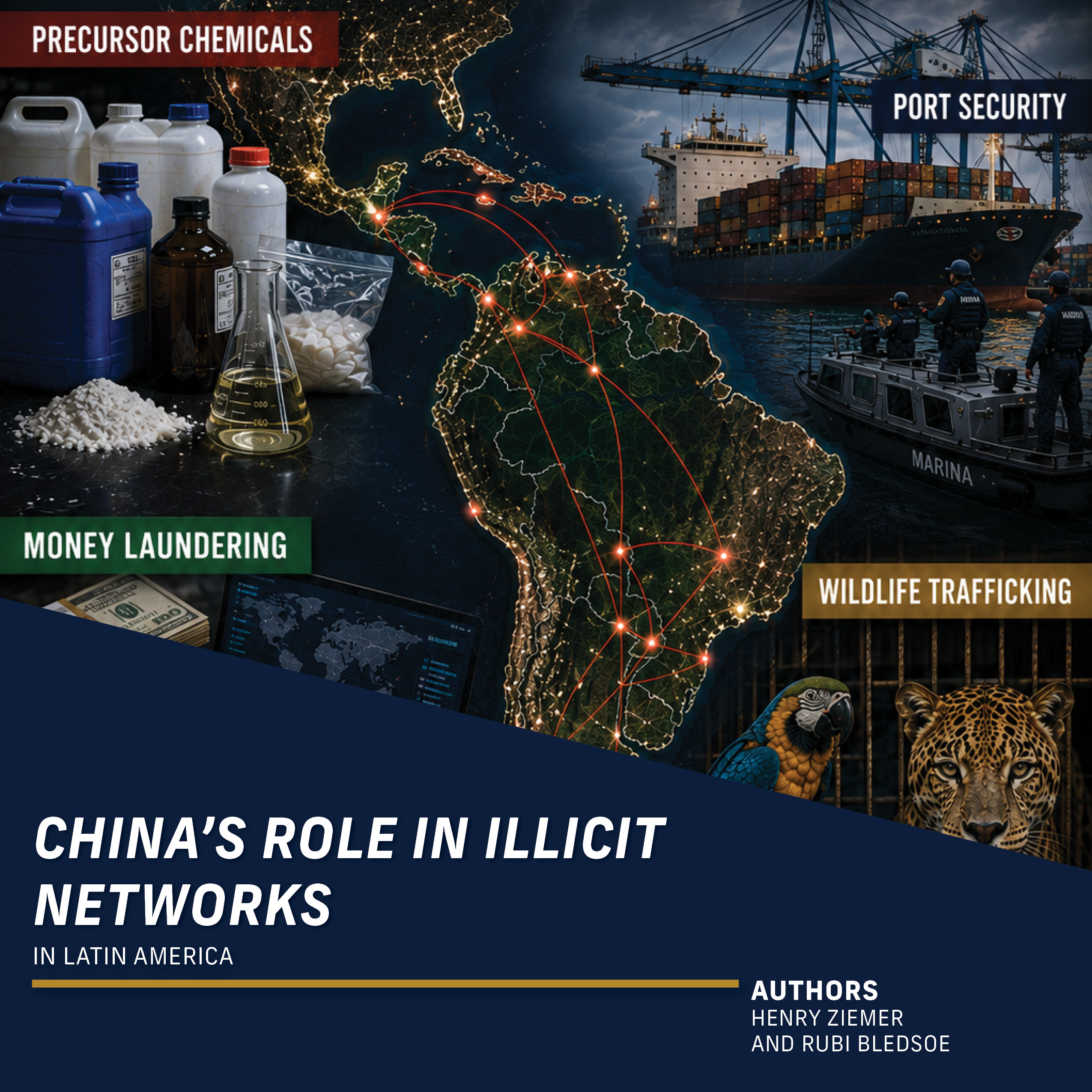
Over the past two decades, two major trends in Latin America and the Caribbean (LAC) have been the rise of the People’s Republic of China (PRC) and the expansion of organized crime. While often treated separately, these dynamics increasingly intersect. As Beijing has deepened its economic and diplomatic engagement in the region, PRC-linked criminal networks have expanded their role in illicit economies, sometimes aligning with China’s political interests (“geo-criminality”), but more often exploiting regulatory opacity and limited law enforcement cooperation. This paper proposes a supply-and-demand framework to understand China’s role in LAC illicit markets. On the supply side, Chinese networks provide precursor chemicals and money laundering services. On the demand side, China’s markets drive environmental crime, while migrant flows create opportunities for smuggling and labor exploitation.
Illicit logistics and conflict in Latin America are being reshaped by accessible technologies that amplify the power of violent non-state actors (VNSAs). Commercial unmanned aerial systems (UAS) and digital currencies now underpin an emerging asymmetric ecosystem that blurs the boundaries between criminal enterprise and irregular warfare. Once marginal, drones have become tools of reconnaissance, smuggling, and attack, with groups such as CJNG, FARC dissidents, and Sinaloa Cartel modifying commercial systems to deliver explosives. Their rapid innovation cycle contrasts sharply with the reactive, import-dependent posture of Latin American states. At the same time, cryptocurrencies have become a preferred channel for laundering proceeds, evading sanctions, and financing weapons procurement. Together, these technologies reduce the physical and financial risks of trafficking, widening the gap between agile criminal actors and bureaucratically constrained states.
Latin America’s drone industry has become strategic due to falling costs, rapid diffusion, and the weaponization of commercial drones by non-state actors. Militaries use unmanned systems for surveillance, border security, and counternarcotics, but progress is limited by weak R&D, import dependence, and regulatory gaps. Brazil leads with strong private and state support; Mexico advances but relies on foreign counter-drone systems. Argentina maintains credible prototypes through INVAP and FAdeA despite budget limits, while Colombia adapts battlefield lessons yet remains largely foreign-sourced. Venezuela’s expansion, backed by Iran and Russia, highlights proliferation risks. Globally, China, Israel, Turkey, Iran, and Russia dominate exports, with DJI controlling much of the commercial market, illustrating the dual-use dilemma. Greater resilience requires regulatory harmonization, tighter export controls, intelligence sharing, and investment in domestic and counter-drone capabilities.
Chile confronts rising transnational crime, including human trafficking, smuggling, narcotics, arms trade, and counterfeiting, exacerbated by weak enforcement, corruption, and porous borders. While the government remains committed to addressing these threats, comprehensive international cooperation, stronger legislation, and improved border security are critical for effectively combatting organized crime and safeguarding stability.
China’s approach to Latin America and the Caribbean (LAC) has evolved from focusing on trade and cooperation to viewing the region as strategically important. Chinese sources now frame LAC as a potential hub for military support and global space operations, especially involving Mexico, Argentina, and Chile. China also promotes its cybersecurity standards in the region, despite links to cyber intrusions. These efforts align with broader Chinese global strategies and may pave the way for a future security presence, positioning LAC as part of China’s extended “Far Seas Protection” strategy.
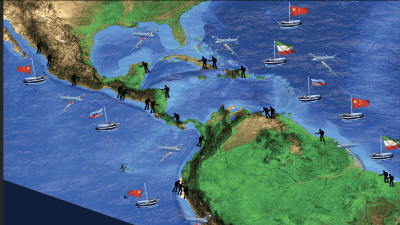
Irregular migration from China, Russia, and Iran via Latin America to the U.S., driven by repression, conflict, and economic instability, raises security concerns. Despite limited direct state orchestration, potential state exploitation, ties to transnational criminal organizations, and gaps in response capabilities highlight the need for a coordinated approach.
Illegal Chinese Migration Routes StoryMap is an interactive narrative that showcases how illegal Chinese migrants make their journey to the United States.
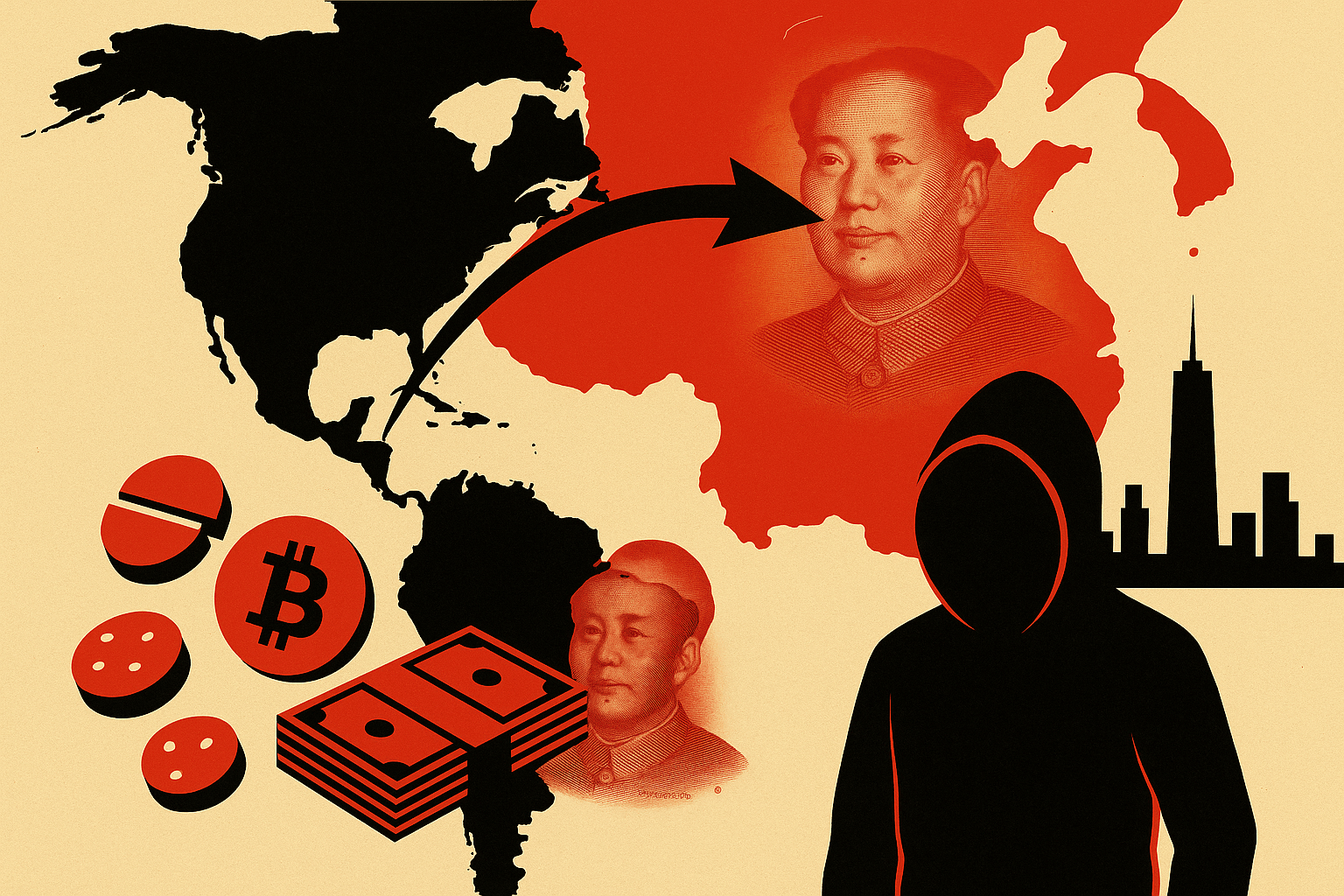
Chinese criminal networks from Fujian province significantly influence illicit markets in the Americas through fentanyl trafficking, money laundering, marijuana cultivation, and wildlife trade, partnering with Mexican cartels. Their complex financial schemes challenge global enforcement, necessitating enhanced international responses.
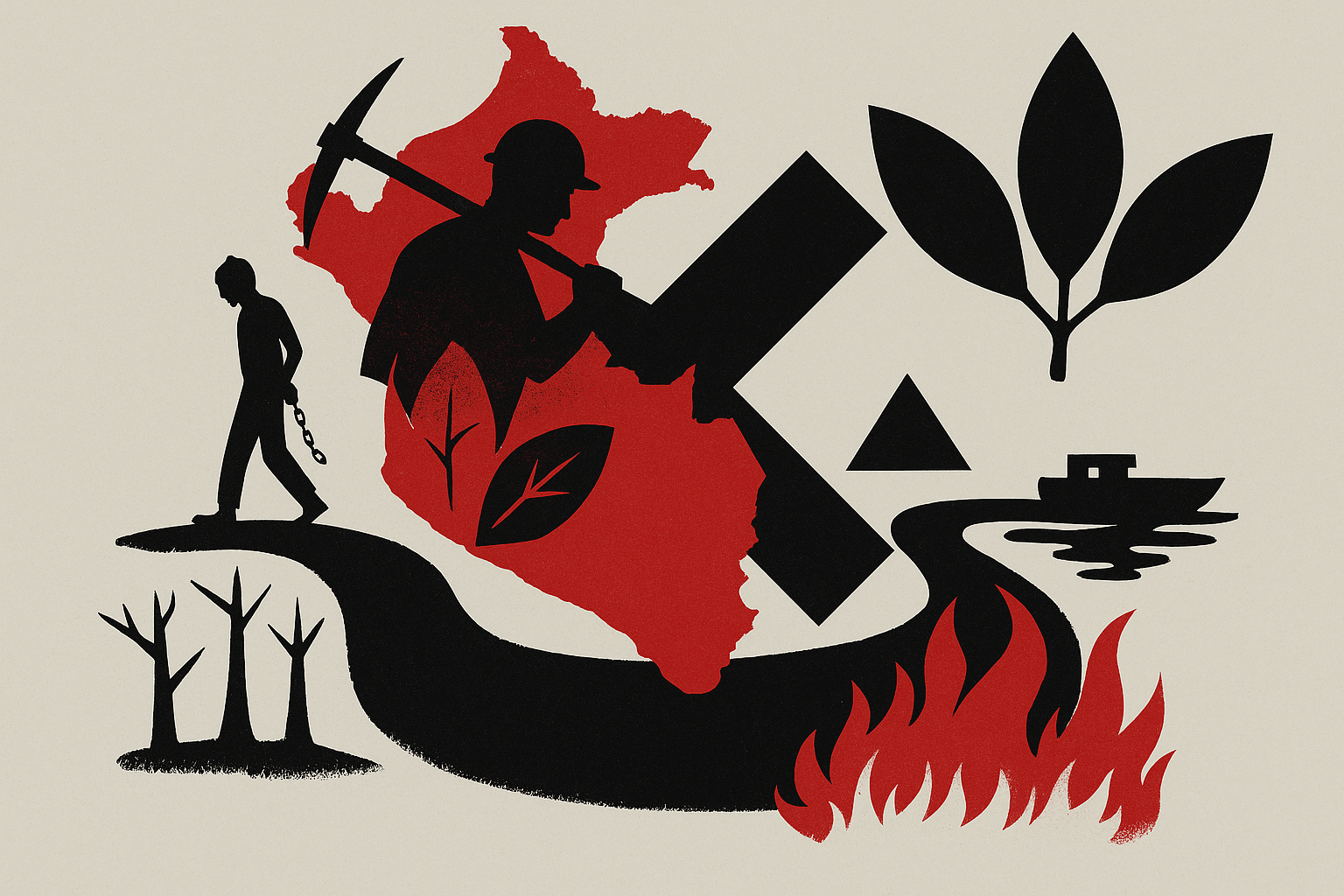
Peru, rich in natural resources like coca, copper, and gold, is increasingly impacted by transnational crime, violence, illegal mining devastation, and human trafficking. Drug smuggling via the Amazonian tri-border region heightens the crisis, challenging national stability and security.
Ransomware gangs and hacktivists employ advanced encryption and data exfiltration techniques, exploit software vulnerabilities, and use detection evasion methods. They are highly adaptable and capable of quickly modifying their tactics in response to new cyber defenses in the South American region.
Illegal, unreported, and unregulated fishing threatens marine ecosystems and coastal livelihoods globally. This study identifies risky ports and transshipment hotspots favored by illicit vessels, highlighting the role of Chinese-affiliated ports and recommending targeted enforcement strategies to combat maritime crime effectively.
The Small Arms, Light Weapons dataset is a joint initiative by the Jack D. Gordon Institute at FIU and La Coordinadora de Investigaciones Economicas y Sociales that seeks to visualize the current dynamics of illicit small arms and light weapons in Latin America and the Caribbean.