
Topics / Spotlights
China's Activities in Latin America
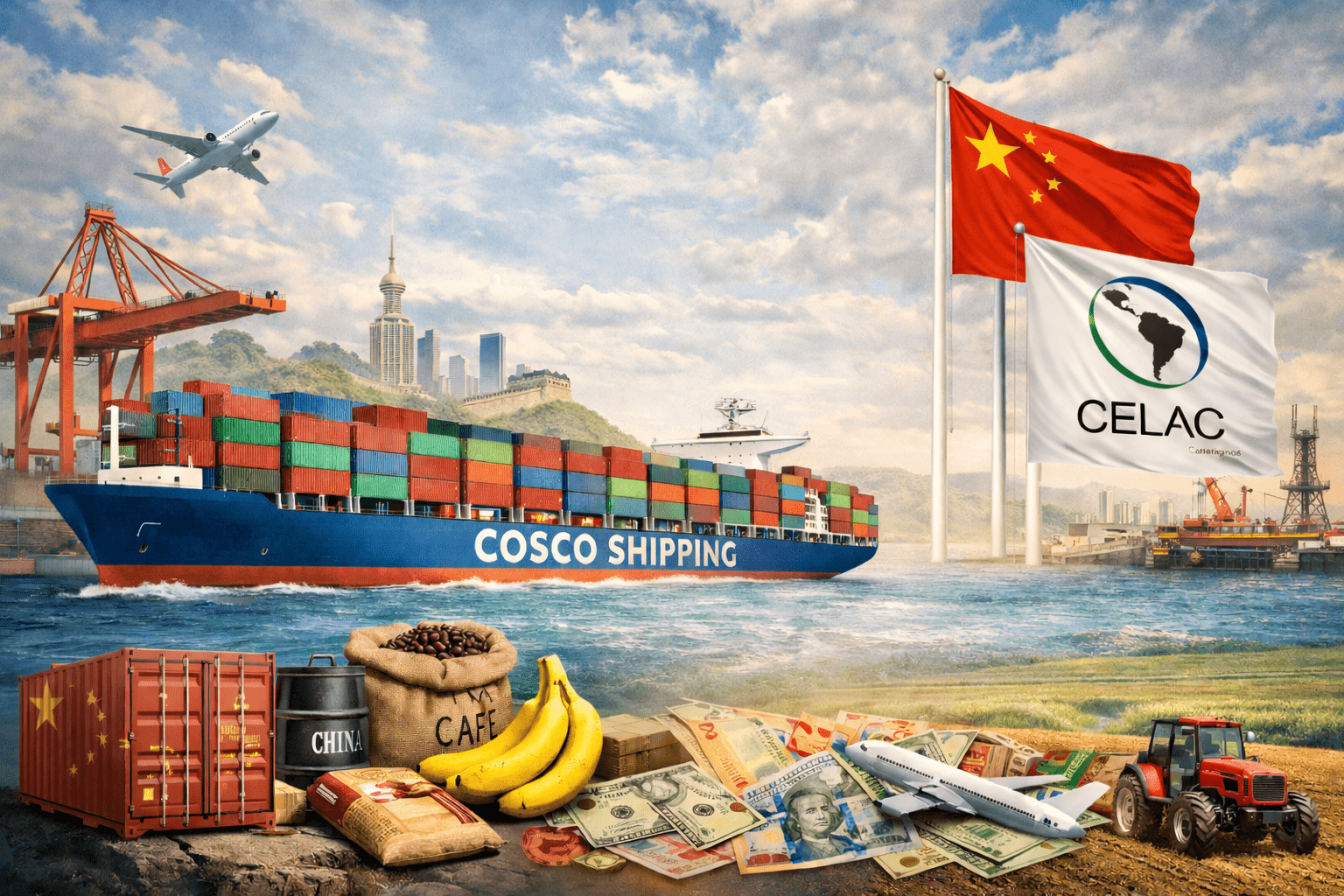
China is not a peripheral actor in Latin America and the Caribbean (LAC); it has become one of the region’s most significant economic and strategic partners. Between 2000 and 2021, China provided approximately $382.63 billion (constant 2021 USD) in development finance to LAC, expanding its footprint through infrastructure, energy, and extractive sector investments. Unlike traditional Western lending, Chinese financing has often come with fewer governance and transparency conditions, paired with public diplomacy efforts aimed at strengthening Beijing’s image.
In recent years, China’s engagement has entered a more selective and strategically focused phase. Bilateral trade reached $518.47 billion in 2024, driven by Latin American exports of minerals, soybeans, and lithium, alongside expanding Chinese exports of manufactured goods, telecommunications equipment, and electric vehicles. However, Latin America’s share of Belt and Road Initiative spending has declined for three consecutive years, accounting for just over 1% of construction spending and 0.4% of outbound investment in the first half of 2025. Sovereign lending and large-scale infrastructure finance have slowed compared to their mid-2010s peak.
Rather than retreating, Beijing is recalibrating. Reflecting domestic priorities focused on financial risk control and technological upgrading, Chinese firms are concentrating on strategic sectors such as lithium, renewable energy, ICT infrastructure, and electric vehicle manufacturing, often through smaller, targeted investments. At the same time, China is expanding its security presence through its Global Security Initiative, supporting an estimated 35 “Safe City” surveillance projects and deepening law enforcement cooperation across the region. These evolving patterns underscore a shift from expansive infrastructure lending to a more diversified, technology, and security-oriented approach, highlighting the adaptive nature of China’s influence in the hemisphere.
Explore our research
Find our latest publications, story maps, and technical resources.
Publications
Jun 04, 2025"Strategic Support Points" in LAC: China's Evolving Strategy in Latin America and the Caribbean
StoryMaps
Jul 25, 2025"Strategic Support Points” in LAC: China's Evolving Strategy in Latin America and the Caribbean
China’s approach to Latin America and the Caribbean (LAC) has evolved from focusing on trade and cooperation to viewing the region as strategically important. Chinese sources now frame LAC as a potential hub for military support and global space operations, especially involving Mexico, Argentina, and Chile. China also promotes its cybersecurity standards in the region, despite links to cyber intrusions. These efforts align with broader Chinese global strategies and may pave the way for a future security presence, positioning LAC as part of China’s extended “Far Seas Protection” strategy.
StoryMaps
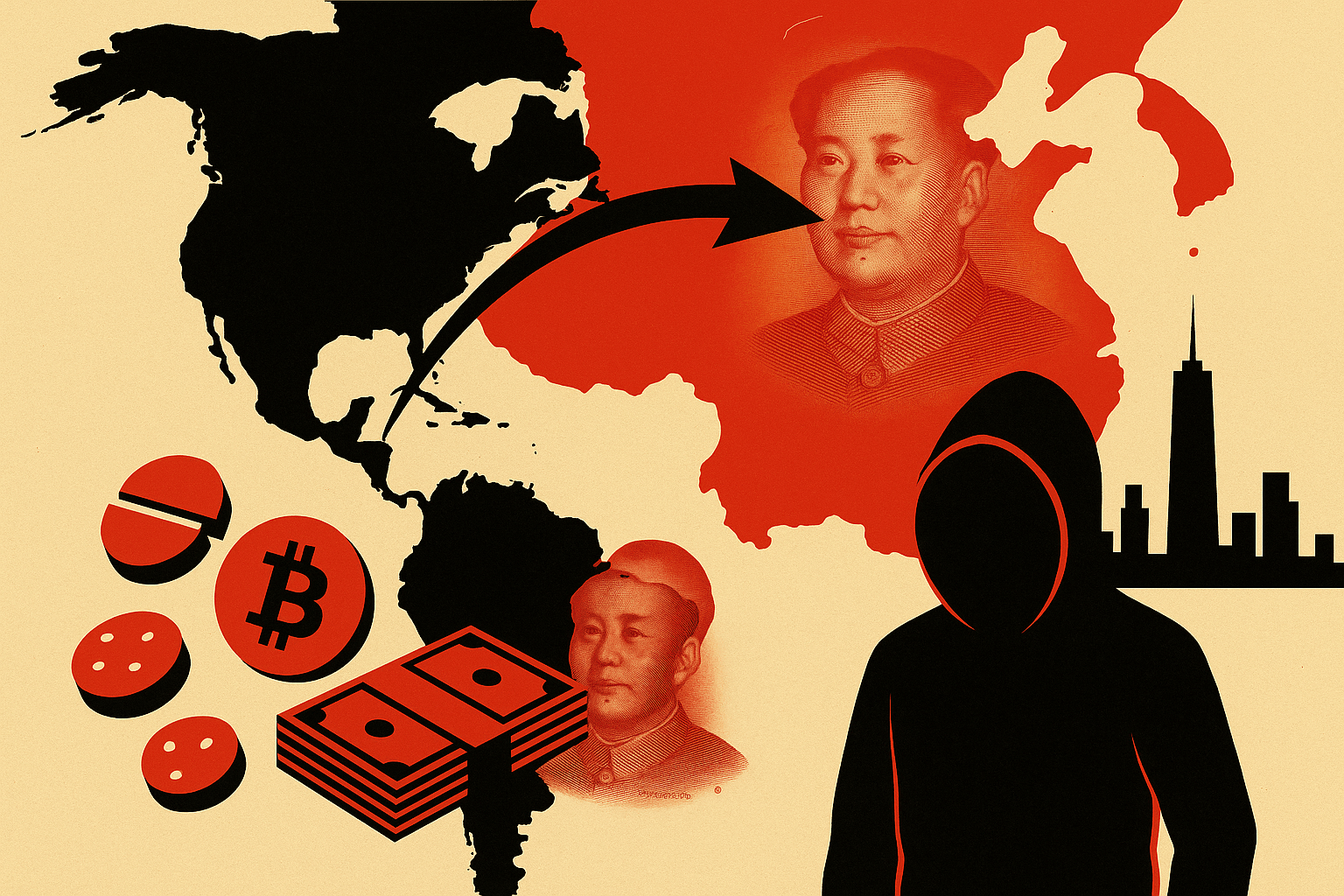
Jan 22, 2025From Fujian to Flushing: Chinese Criminal Networks in the Americas and Beyond
Chinese criminal networks from Fujian province significantly influence illicit markets in the Americas through fentanyl trafficking, money laundering, marijuana cultivation, and wildlife trade, partnering with Mexican cartels. Their complex financial schemes challenge global enforcement, necessitating enhanced international responses.
Vessels such as the Peace Ark hospital ship and research platforms like Tan Suo Yi Hao illustrate how China blends soft power with strategic positioning. These missions facilitate defense engagement, enhance maritime domain familiarity, and may support the mapping of undersea infrastructure and conditions relevant to submarine operations. Unlike U.S. humanitarian deployments, which are typically crisis-driven, China’s missions are more consistent and politically oriented, reinforcing long-term presence and influence.
This report argues that China’s use of “white-hulled” vessels, including research ships, coast guard units, and distant-water fishing fleets, represents a gray-zone approach that blurs the line between civilian and military activity. These deployments expand China’s operational awareness while minimizing political signaling. As great power competition intensifies, such activities may gradually challenge regional maritime governance and U.S. influence. Strengthening monitoring capabilities, regulatory frameworks, and regional partnerships will be critical to ensuring transparency, protecting sovereignty, and safeguarding strategic maritime infrastructure.
Juan Pablo Toro, Martin Brown | Source: FIU's Jack D. Gordon Institute
China’s presence also intersects with regional security challenges. Its distant-water fishing fleets have contributed to illegal, unreported, and unregulated (IUU) fishing across Latin American waters, depleting resources and raising sovereignty concerns. Additionally, China’s role in supplying precursor chemicals used in fentanyl production has indirectly enabled transnational criminal networks that impact both Latin America and the United States. At the same time, Beijing has deepened ties with authoritarian regimes, expanded military exchanges, and supported the development of dual-use infrastructure with potential strategic and intelligence applications.
While China’s economic importance makes it an attractive partner for many Latin American countries, its activities introduce long-term concerns related to governance, security, and regional stability. These dynamics complicate U.S. policy responses and highlight the growing strategic competition shaping the hemisphere.
Henry Large | Source: Foreign Policy Research Institute
China’s engagement has translated into tangible leverage, including a network of port projects, space infrastructure, and telecommunications systems tied to firms like Huawei. These developments, alongside rising trade and industrial exports, have deepened Latin America’s economic dependence on China while increasing the risk of dual-use infrastructure and data vulnerabilities. At the same time, Beijing continues to expand its influence through state-backed financing and long-term strategic positioning in key sectors.
This report suggests that U.S.-China competition in Latin America is increasingly centered on control over strategic assets, supply chains, and digital infrastructure. While the United States retains advantages in investment, geography, and security partnerships, its ability to counter China will depend on offering credible economic alternatives and strengthening regional cooperation. Efforts to enhance infrastructure financing, secure digital networks, and improve transparency are critical to reducing China’s influence while maintaining regional stability.
Ryan Berg | Source: CSIS
Narayani Sritharan, Johnathon Solis | Source: FIU Institutional Repository
Douglas Farah | Source: FIU Institutional Repository
Margaret Myers | Source: Americas Quarterly
Brian Fonseca, Nicole Writt, Martin Brown | Source: Americas Quarterly
Ryan Berg, Henry Ziemer | Source: CSIS
Ryan Berg, Christopher Hernandez-Roy, Jessie Hu, Henry Ziemer | Source: CSIS
Henry Ziemer, Jaehyun Han, Aidan Powers-Riggs | Source: CSIS
Henry Ziemer | Source: CSIS
Ryan Berg, Henrietta Levin, Bonny Lin | Source: CSIS
Source: CSIS
Source: Atlantic Council TV
Source: CEBRI
Source: Boston University
Source: America University
Source: Boston University
Source: ICLAC
Source: William and Mary University