
Topics / Spotlights
Counter Unmanned Aerial Systems (UAS) Policies and Efforts in Central and South America
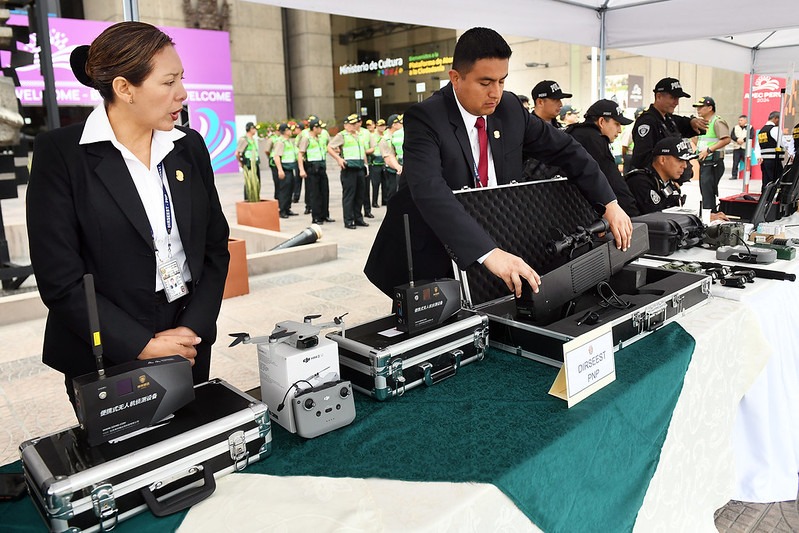
Latin American nations are currently grappling with an asymmetric "arms race" as non-state actors, such as Mexican cartels and Colombian insurgent groups, increasingly deploy weaponized drones for surveillance, logistics, and lethal attacks. To counter this, countries are implementing a multi-pronged approach involving strategic legislative reforms, such as Mexico’s 53-year prison sentences for criminal drone use, and massive financial investments, exemplified by Colombia’s $1.7 billion "National Anti-Drone Shield Project". Brazil implements a structured response by integrating radar and jamming systems into critical infrastructure, while Argentina and Peru focus on securing prisons and high-profile international events through the deployment of portable electronic inhibitors. Throughout the region, a regulatory shift is occurring toward risk-based operational categories and the formalization of legal authority for security forces to neutralize unauthorized drones using non-kinetic means like radio frequency jamming. These efforts are increasingly characterized by bilateral and regional cooperation, such as the Mexico-U.S. Security Implementation Group, to harmonize export controls and collaborate in protecting regional evolving aerial threats.
(Image Source: Peru Minister of State Release)
Explore our research
Find our latest publications, story maps, and technical resources.
Publications
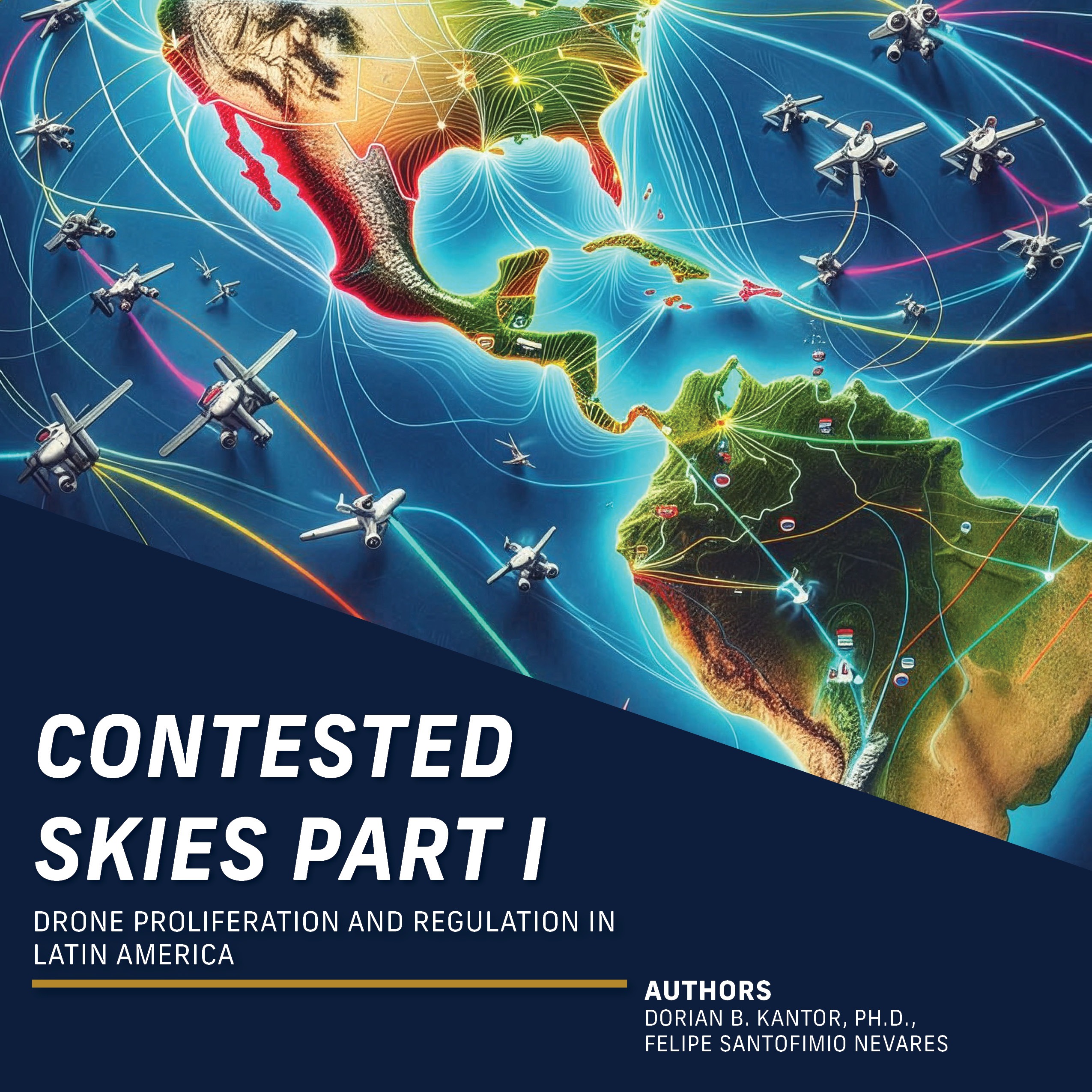
Feb 10, 2026Contested Skies Part I: Drone Proliferation and Regulation in Latin America
StoryMaps
Feb 11, 2026Contested Skies Part I: Drone Proliferation and Regulation in Latin America
Latin America’s drone industry has become strategic due to falling costs, rapid diffusion, and the weaponization of commercial drones by non-state actors. Militaries use unmanned systems for surveillance, border security, and counternarcotics, but progress is limited by weak R&D, import dependence, and regulatory gaps. Brazil leads with strong private and state support; Mexico advances but relies on foreign counter-drone systems. Argentina maintains credible prototypes through INVAP and FAdeA despite budget limits, while Colombia adapts battlefield lessons yet remains largely foreign-sourced. Venezuela’s expansion, backed by Iran and Russia, highlights proliferation risks. Globally, China, Israel, Turkey, Iran, and Russia dominate exports, with DJI controlling much of the commercial market, illustrating the dual-use dilemma. Greater resilience requires regulatory harmonization, tighter export controls, intelligence sharing, and investment in domestic and counter-drone capabilities.
Dr. Dorian B. Kantor, Felipe SantoFimio Nevares | Source: Jack D. Gordon Institute for Public Policy
Source: Inter-American Committee on Ports (CIP)
Henry Ziemer | Source: Center for Strategic and International Studies (CSIS)
Jake Dulligan, Laura Freeman, Austin Phoenix, Bradley Davis | Source: Combating Terrorism Center, West Point
Jochen Kleinschmidt, Luca Trentaa | Source: Global Drug Policy Observatory, Swansea University
Source: PAX for Peace
Source: National Civil Aviation Administration, Ministry of Economy (Argentina)
Source: Ministry of Security (Argentina), Official Youtube Chanel
Source: Ministry of Security (Argentina)
Source: National Civil Aviation Administration (ANAC), Ministry of Transport (Argentina)
Source: Undersecretariat for Scenario Assessment and Strategic Intelligence, Brazil
Source: Minister of Justice, Republic of Argentina
Source: Infodefensa
Source: Ministry of Security (Argentina)
Source: National Civil Aviation Administration (ANAC), Ministry of Transport (Argentina)
Source: Escuela Superior de Guerra Aérea (ESGA) (Air War College, Argentina)
Source: EDGE Group
Source: Brazilian Army, Brazil
Source: Ministry of Defense, Brazil
Source: National Agency for Civil Aviation, Brazil
Source: International Trade Administration (ITA), United States of America
Source: Office of the President, Colombia
Source: Infobae
Response to Escalating Security Threats : The push for regulation is driven by a significant rise in drone attacks by criminal groups, which have increased by 138% compared to the previous year. These groups are targeting both security forces and the civilian population, creating an urgent need for legal protections and technical controls to safeguard critical infrastructure such as airports and communication towers.
Strategic Use of the Radio Spectrum : A central pillar of Colombia's counter-UAS strategy involves the Ministry of ICT acting as a technical authority to regulate the radio spectrum. This allows the government to define legal protocols for blocking the frequencies of drones used for malicious purposes, ensuring that countermeasures do not interfere with national telecommunications stability.
Source: Ministry of Information Technologies and Communications (MinTIC), Colombia
Source: Congress of the Republic of Colombia (Legislative Branch)
Source: Special Administrative Unit of Civil Aeronautics (Aeronáutica Civil), Colombia
Source: National Penitentiary Institute
Source: Ministry of the Interior
Source: Ministry of Transport and Communications (MTC) / General Directorate of Civil Aeronautics (DGAC), Republic of Peru
Source: Ministry of Transportation and Comunications
Source: Secretary of External Relations, Mexico
Source: Jack D. Gordon Institute for Public Policy, Florida International University
Source: Secretary of Planning, Finances and Administration, Mexico
Source: Associated Press (AP News)
Source: Secretary of Security and Citizen Protection, Mexico
Source: Subcommittee of Acquisitions for the public security, Michoacan de Ocampo, Mexico
Source: Insight Crime
Source: Infobae
Source: Insight Crime
Source: Civil Aviation Agency, Mexico
Source: Official Federal Journal, Mexico