
Malign State Actors Cooperation with Venezuela
Topics / Spotlights
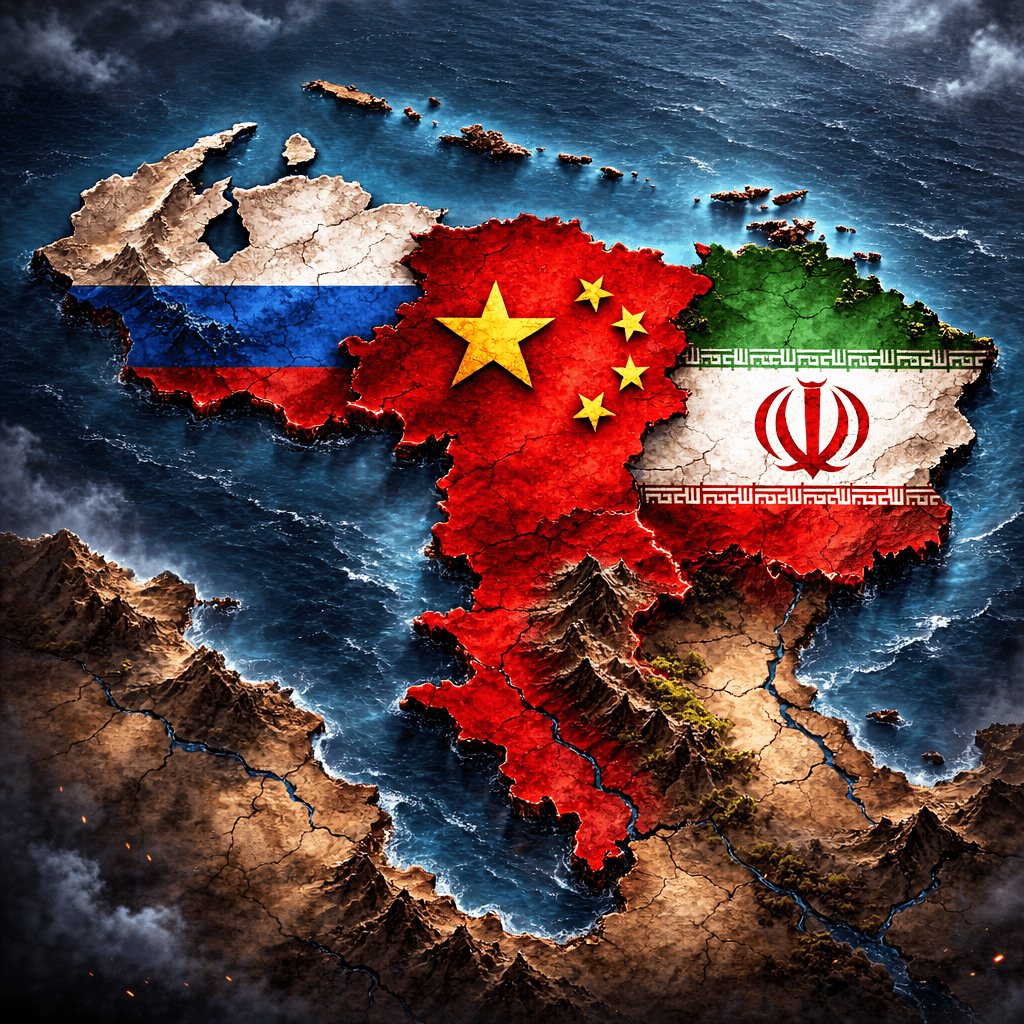
Venezuela under Nicolás Maduro has pursued a coherent foreign policy primarily aimed at ensuring regime survival amid sanctions, isolation, and economic collapse. This strategy reflects deliberate adaptation to a hostile international environment rather than ideological inconsistency. Caracas has leveraged geopolitical rivalries, particularly with Russia, China, and Iran, to offset Western pressure while preserving flexibility. Three core tools define this approach: brinkmanship to escalate tensions and reinforce nationalist legitimacy; decoupling to reduce dependence on Western economic and security ties through diversified partnerships; and hedging to maintain limited engagement with Western actors and avoid total isolation. Domestically, a narrow coalition of military leaders, political elites, and economic powerbrokers shapes foreign policy, using external alliances and rents to sustain loyalty and externalize internal conflicts.
International cooperation with authoritarian states has also directly strengthened the regime’s capacity to consolidate power. External partnerships provided financing, debt relief, and energy investments that softened the impact of sanctions and economic decline. Technology and expertise from partners enabled expanded surveillance and social control, while foreign media and information networks amplified pro-regime narratives and countered Western criticism. Transnational financial and illicit networks further helped bypass sanctions, monetize resources, and maintain elite cohesion. Together, these external relationships reinforced political, economic, and coercive control, demonstrating how strategic foreign alignment and autocratic cooperation can stabilize and deepen authoritarian rule even during prolonged crisis.
Recommended Readings: Authoritative Sources
Recommended Readings: Supplemental Sources