
Counter Unmanned Aerial Systems (UAS) Policies and Efforts in Central and South America
Topics / Spotlights
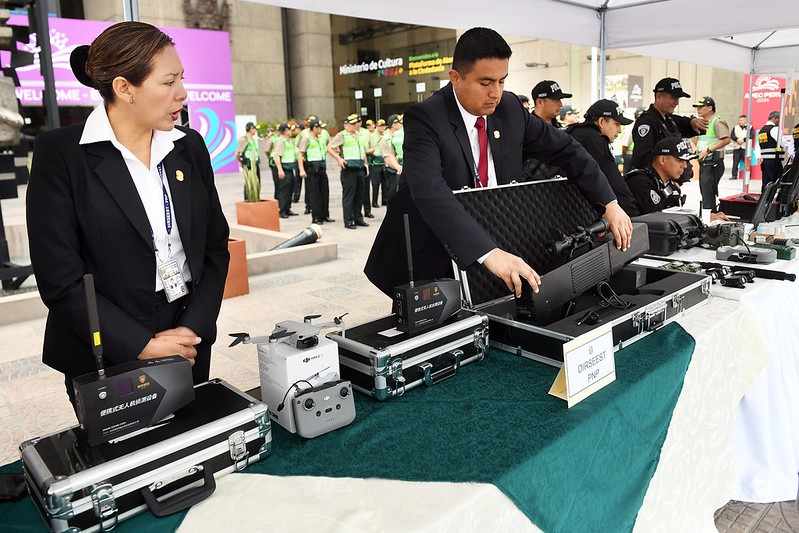
Latin American nations are currently grappling with an asymmetric “arms race” as non-state actors, such as Mexican cartels and Colombian insurgent groups, increasingly deploy weaponized drones for surveillance, logistics, and lethal attacks. To counter this, countries are implementing a multi-pronged approach involving strategic legislative reforms, such as Mexico’s 53-year prison sentences for criminal drone use, and massive financial investments, exemplified by Colombia’s $1.7 billion “National Anti-Drone Shield Project”. Brazil implements a structured response by integrating radar and jamming systems into critical infrastructure, while Argentina and Peru focus on securing prisons and high-profile international events through the deployment of portable electronic inhibitors. Throughout the region, a regulatory shift is occurring toward risk-based operational categories and the formalization of legal authority for security forces to neutralize unauthorized drones using non-kinetic means like radio frequency jamming. These efforts are increasingly characterized by bilateral and regional cooperation, such as the Mexico-U.S. Security Implementation Group, to harmonize export controls and collaborate in protecting regional evolving aerial threats.
(Image Source: Peru Minister of State Release)
REGIONAL (Latin America and the Caribbean)
ARGENTINA
BRAZIL
COLOMBIA
PERU
MEXICO